

Megan Simmons
Senior Consultant
As explored in a recent article from our Founder & Partner Laura MacDonald, “From Asking to Advising,” charitable giving is growing more complex. In this changing landscape, the future belongs to professionals who can serve as philanthropic thought partners to donors. Who lead with curiosity and work to pinpoint donors’ passions. Who focus on impact, rather than organizational needs. Who center partnership, not persuasion.
One of the most powerful places to begin this shift is with our language. The words we use influence how we think about donors, and how donors experience our organization. Language can reinforce a transactional mindset, or help build a culture of mutual purpose and respect.
Below are practical examples of how your organization can begin making this shift, one conversation and message at a time:
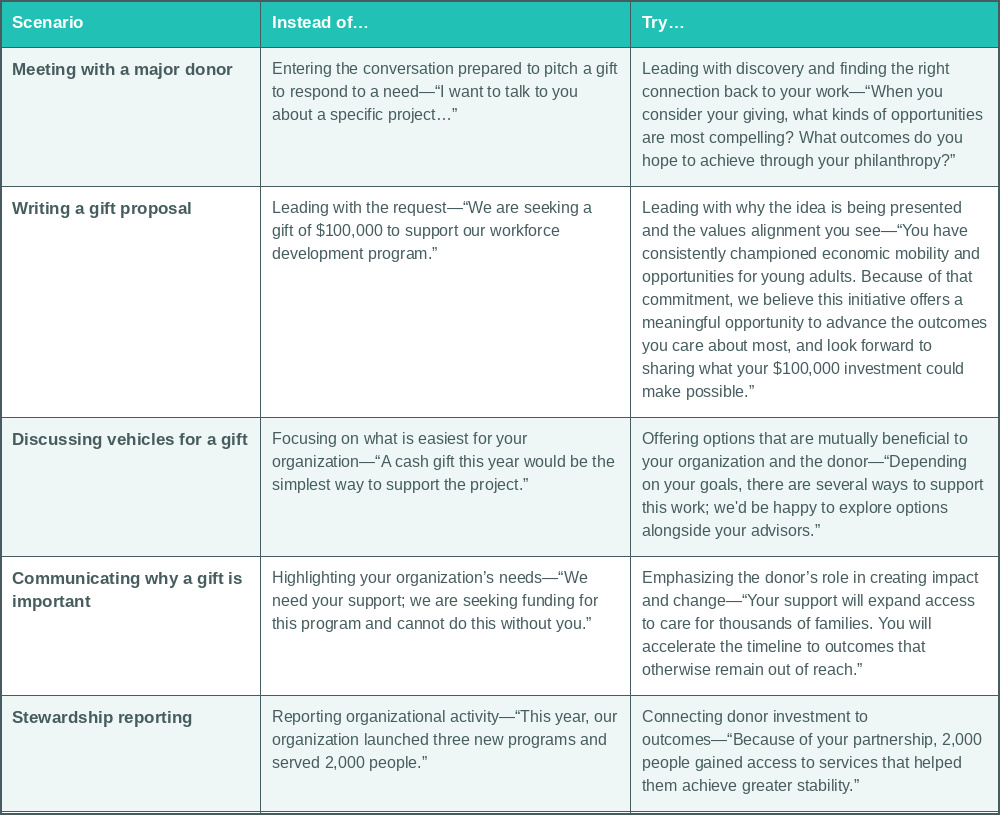
You can begin immediately by reviewing your common fundraising materials. Look at your website, case for support, appeal letters, and other donor-facing correspondence. Ask: does our language focus primarily on our needs or on the impact donors can help achieve? Are donors portrayed as funders or as true partners? Are we conveying trust, respect, and collaboration?
Ultimately, this transformation is about moving from a mindset of seeking resources, to a focus on helping people align their values with meaningful action. The question is not, “How do we convince someone to give?” The question is, “How do we help people achieve the impact they hope to have in the world?”
Ready to shift your donor language from persuasion to partnership? Let’s talk—our communications team can help you audit your donor-facing materials and build messaging that puts partnership first.